
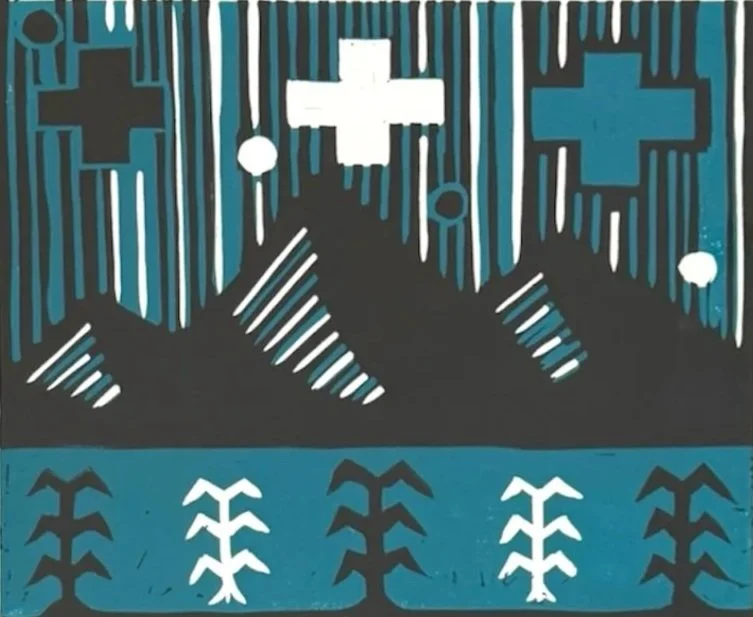
DUHON JAMES, Printmaker
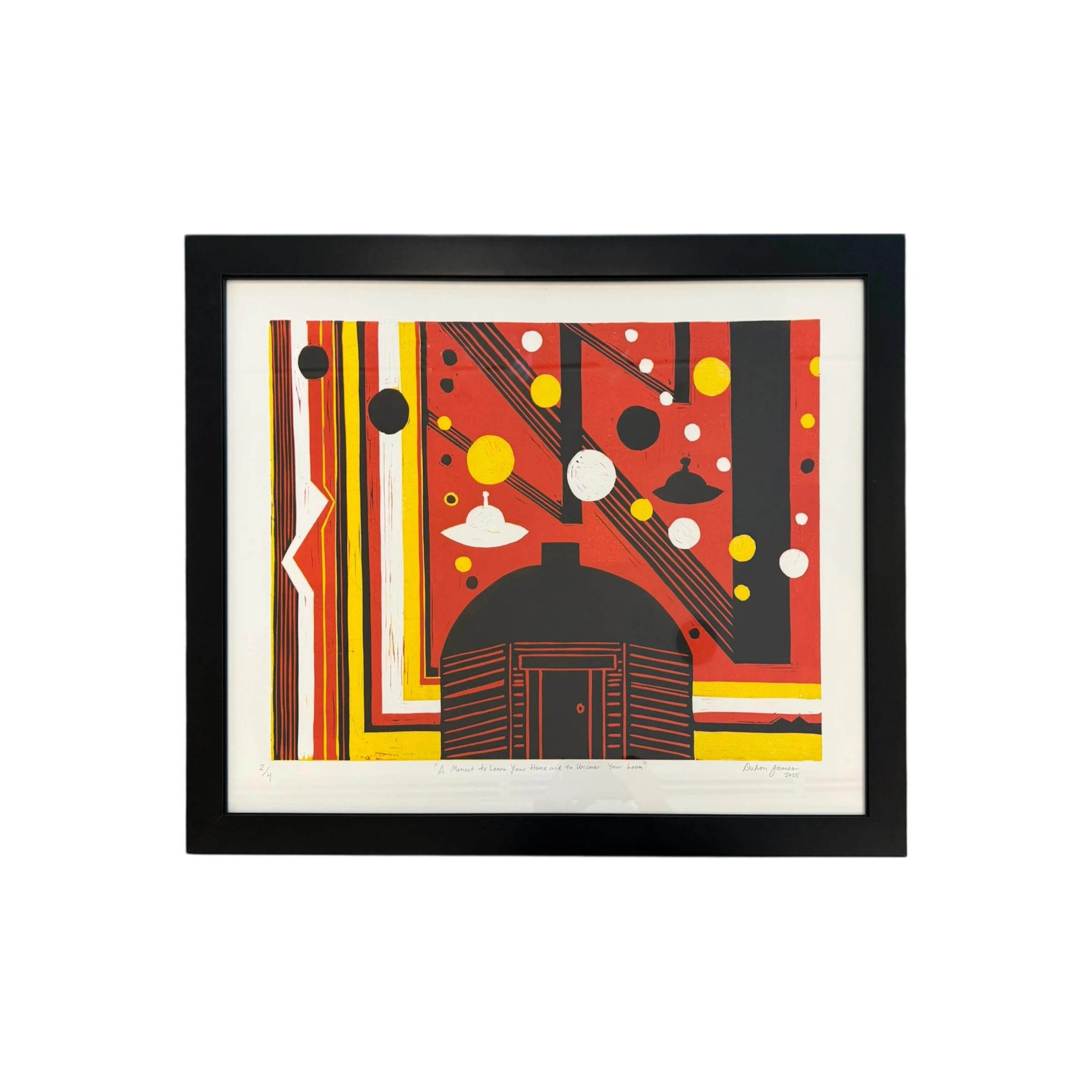
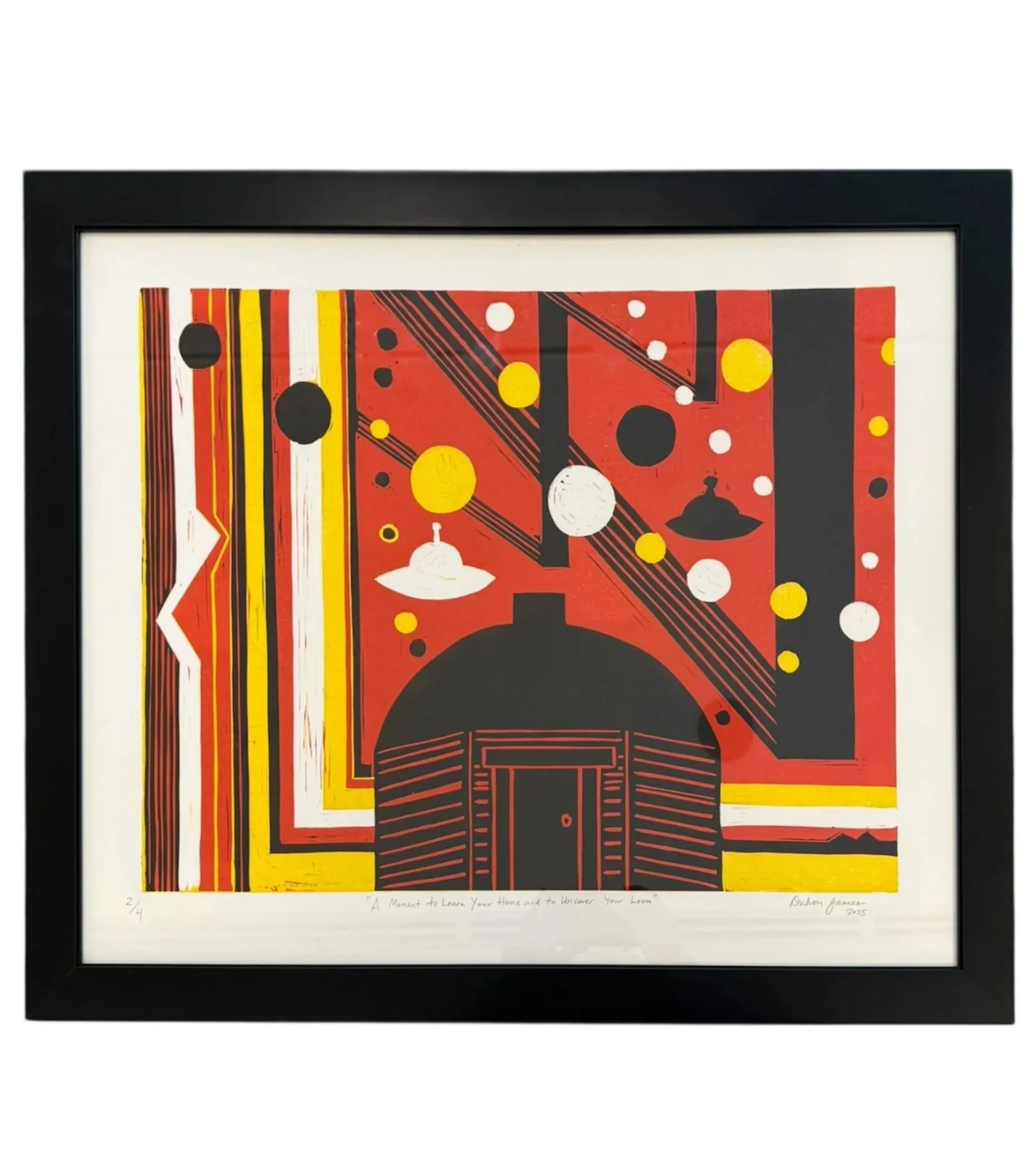
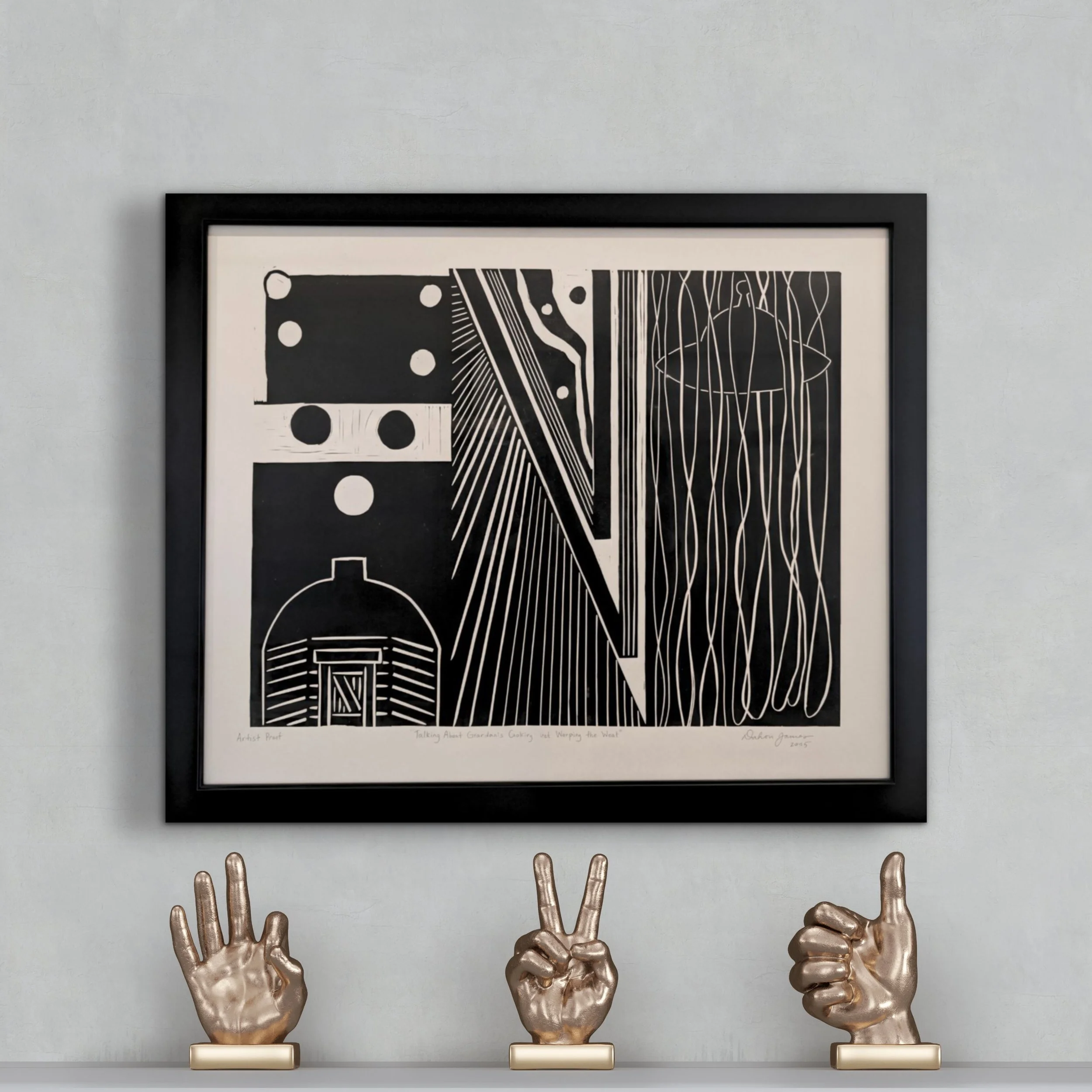
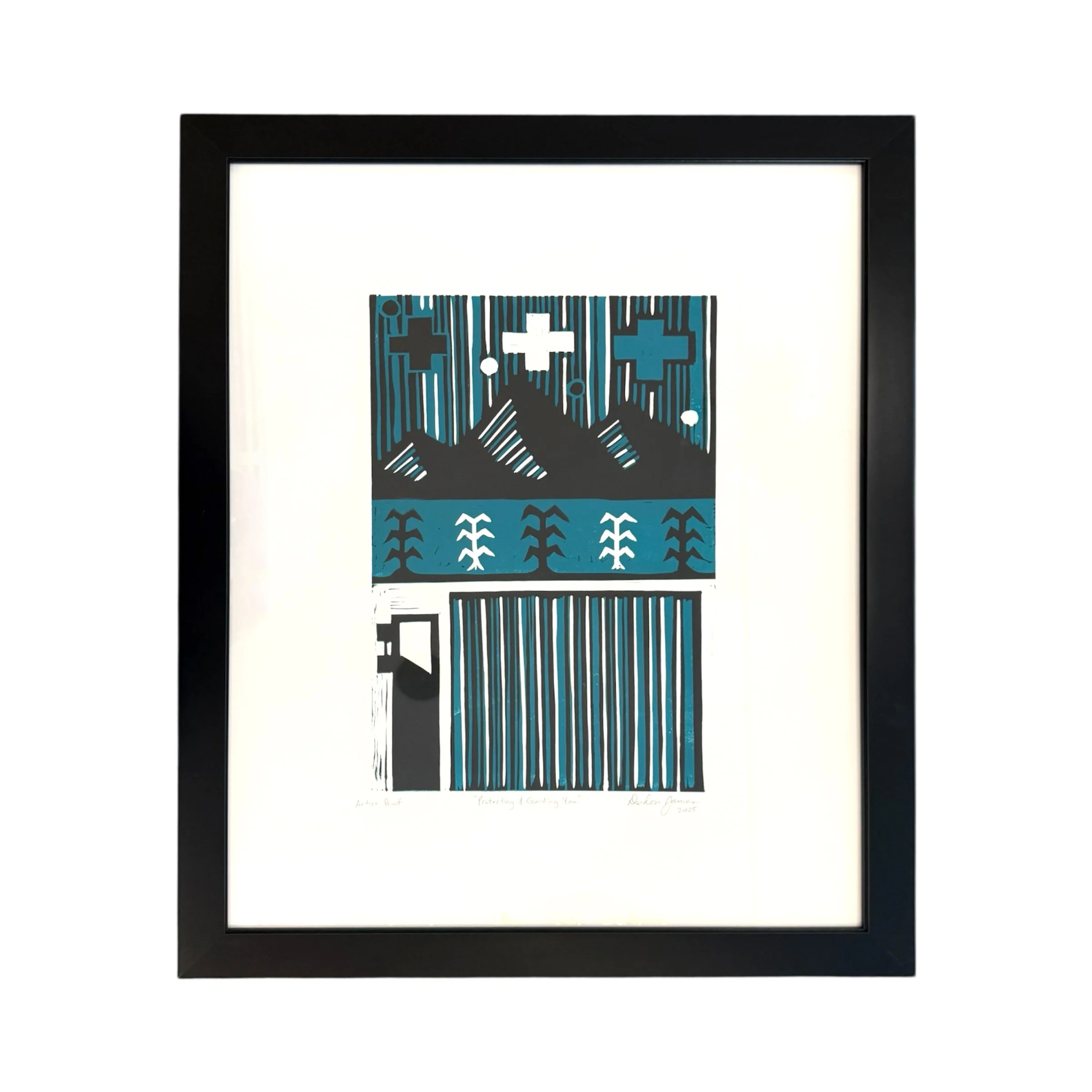
Diné printmaker Duhon James, Water’s Edge Clan, born for the Bitter Water Clan, earned his BFA in Studio Arts from the Institute of American Indian Arts in 2014. He works primarily in linocuts, a relief printing method using a linoleum block. His work is rooted in close observation of the natural world and the ways light, land, clouds, and water create moments of color, balance, and pause. Inspired by elements and designs found in textiles, James explores cycles of life through recurring imagery such as stars, corn, mountains, hogans, and water. These elements reflect both the Navajo landscape and a broader cosmology that connects community, land, and the universe. Textile references in his work honor elders and the long tradition of rug weaving, including the Ganado Red rug, which he approaches with simplicity and innovation. James’s work visualizes Navajo life as a living continuum, grounded in respect for elders whose teachings continue to guide what it means to live, create, and belong.

View available works by Duhon James at Gallery Hozho





ARTIST’S STATEMENT
“My visuals look at how the sun, land, and clouds create colors as they engage life is a stopping moment, where you realize how their colors play. Creating these linoleum block prints, is a way for me to create a life form and evolving cycles with water, stars, corn, and mountains. Also, having a textile expression of it representing our elders, who have created different rugs throughout their lives. Keeping it simple does play a role in my community of the Ganado Red rug and interrupting and approaching it differently with stars, a mountain, and a hogan. My artworks visualize the Navajo lifestyle and include a rotating cast of stars, corn, textile, Hogan, and the universe. I would like to acknowledge every elder who has brought every one of us into this world. They are still teaching us, of what it means to be here, and to understand what they are passing onto us.”
